Methods
Want to find out how to support your child with a different learning style? These tips and strategies will help you find homeschooling success! By understanding the differences in learning styles, you'll be equipped to best meet the needs of each of your individual learners in your family.
What's Popular
Unschooling Discussion
St Charles County, Missouri Unschoolers
Unschooling in the Midwest

Minds More Awake: The Vison of Charlotte Mason
Why Unschool?
Basic Christian Education Academy
Learning Is Child's Play
CM-Waldorf
An Unschooling Experiment
Natural Family Living
Christopherus Homeschool Resources
Live Education!
Why Natural Learning – Does It Make Sense?
Missouri Virtual Instruction Program
Classical Education St. Louis
Resources

Children at Play : Using Waldorf Principles to Foster Childhood Development

Montessori: A Modern Approach
Paula Polk Lillard writes both as a trained educators and as a concerned parent -- she has many years as a public school teacher, but it was her enthusiasm for the education her own child experienced in a Montessori school that led her to become a leading voice in the Montessori movement in this country.
Her book offers the clearest and most concise statement of the Montessori method of child development and education available today.

Waldorf Education: A Family Guide
What draws parents and educators toward Waldorf Education today? "Waldorf Education - A Family Guide" offers a "first look" for parents and educators into the history, philosophy, curriculum, and traditions of this unique education. This comprehensive book is a collection of articles describing the world of Waldorf Education - the fastest growing independent school movement in the world.

Rhythms of Learning : What Waldorf Education Offers Children, Parents & Teachers (Vista Series, V. 4) (Vista Series, V. 4)
This collection is the clearest introduction to the ideas of Waldorf education currently available. "Rhythms of Learning" contains Steiner's most important lectures on teaching and child development. It is an excellent resource for everyone interested in taking education successfully into the 21st century.

Tomorrows Child

Free to Learn: Introducing Steiner Waldorf Earkt Childhood Education
Topics include:
· How kindergarten enables healthy child development
· What is movement based learning
· Why creative play is so crucial
· How children learn through imitation and rhythm
· When children are ready for school
· How to get support for parenting and daycare
Free to Learn is a unique guide to the principles and methods of Waldorf early education, drawing on kindergarten experience from around the world, with stories, helpful insights, lively observations, and pictures.

Understanding Waldorf Education : Teaching from the Inside Out
Written by a teacher with more than 25 years of experience, this book offers a jargon-free view of Waldorf schools with their philosophy of the importance of a three-dimensional education. Through learning experiences that involve all of the senses, children use a variety of intelligences to develop thought, feeling, and intentional, purposeful activity. Whether you_re a Waldorf parent or teacher, or you just want to learn more about these innovative educational concepts, this book contains important ideas on learning that you can apply today.

The Absorbent Mind
A new foreword by John Chattin-McNichols, Ph.D., President of the American Montessori Society, places this classic book in a contemporary context, offering an intelligent discussion of current thinking in child education.

Real Lives: Eleven Teenagers Who Don't Go to School

Homeschooling: The Teen Years : Your Complete Guide to Successfully Homeschooling the 13- to 18- Year-Old (Prima Home Learning Library)
The guide is neatly packaged and easy to read in the same style of its sister publications, Homeschooling: The Early Years and Homeschooling: The Middle Years. A large collection of lists and quick tips offer everything from the top 10 books for teens and the most popular math programs to money-saver suggestions such as joining a local college's foreign-language club and asking for discarded equipment from local schools. The last chapter contains two college application essays written by teenage homeschoolers. It also provides reassuring information about diplomas. Many universities follow Harvard's policy of not requiring a diploma, but if you or your homeschooling support group do issue one, your teenager can answer "yes" to the diploma question on most job applications--a fact sure to illicit a collective sigh of relief from thousands of parents who homeschool their teens. --Jodi Mailander Farrell

Homeschooling: The Early Years: Your Complete Guide to Successfully Homeschooling the 3- to 8- Year-Old Child

Montessori Method

Teach Me to Do It Myself: Montessori Activities for You and Your Child

Kinder Dolls: A Waldorf Doll-Making Handbook
Included are:
· Ten designs, including soft, baggy, angel, pouch, sack, and limbed dolls
· Twelve basic clothes patterns and ethnic variations
· Tools, techniques, and materials
· Safety guidelines and sewing methods
· Recycling tips and where to get materials

Discovery of the Child

Maria Montessori: Her Life and Work
The new introduction to Maria Montessori: Her Life and Work by Lee Havis, executive director of the International Montessori Society, discusses the changes that have taken place in Montessori education within recent years.
An updated appendix of Montessori periodicals, courses, societies, films, and teaching materials.
A revised bibliography of books by and about Maria Montessori.

Freedom and Beyond (Innovators in Education)

For the Learners' Sake: Brain-Based Instruction for the 21st Century

Montessori Play And Learn : A Parent's Guide to Purposeful Play from Two to Six
Now, Lesley Britton, the leading Montessori practitioner in England for more than twenty years, will show parents how to bring Montessori home. If you would like to facilitate the development of your child's unique personality, make it possible for him to develop to his full intellectual capacity, and help him become socially and emotionally well adjusted, then this is the book for you.
Montessori Play and Learn is packed with ideas, activities, and games that can fit into your normal routine and help supplement preschool learning for your child. For planning your home, introducing your child to the supermarket or the neighborhood, and helping him discover other people and cultures, this book provides valuable tips and insights that help parents and children grow and learn together.
-- Create hundreds of learning opportunities from everyday life
-- Learn dozens of games and activities to help prepare children for mathematics, reading, science, and writing
-- Make your home environment as stimulating for your child as the best Montessori preschool.

Dumbing Us Down: The Hidden Curriculum of Compulsory Schooling
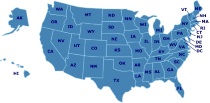
Looking for Another State?
Featured Resources
As an Amazon Associate, we earn from qualifying purchases. We get commissions for purchases made through links on this site.

Unclutter Your Home: 7 Simple Steps, 700 Tips & Ideas (Simplicity Series)

Perrine's Sound & Sense: An Introduction to Poetry
Discovery of the Child

I Learn Better by Teaching Myself/Still Teaching Ourselves
