Missouri Homeschooling
Join us as we explore homeschooling in Missouri. You'll find support groups, teaching tips, stories of successful homeschoolers, events, discussions of homeschooling methods, and much, much more.
What's Popular
National Association of Catholic Homes & Educators (NACHE)
The National Association of Catholic Homes and Educators (NACHE) is a nonprofit organization of homeschooling parents. The purpose of the organization is to provide spiritual, doctrinal, and practical information to homeschooling Catholics, those considering homeschooling, and for Catholics forming their children in the Faith; to assist with regional Catholic homeschooling conventions; and to publish a journal, The Catholic Home.
LEARN Home Education Network
An all-inclusive, secular, home education support network based in the metro Kansas City area, L.E.A.R.N., was born in 1994 when a handful of families gathered to share friendship, activities and homeschooling resources.
Currently L.E.A.R.N. supports 200 families with a wide variety of ideologies regarding home education. These families reside in Kansas, Missouri and Iowa, and belong to L.E.A.R.N. as part of their home education support network.
St. Louis Secular Homeschooler's Co-Op (STLhomeschool)
This list is the email loop for the St. Louis Secular Homeschooler's Co-Op in St. Louis, Missouri.
Missouri Homeschool (MOHomeschool)
This is a list for all homeschooling families in the state of Missouri, especially Christian based education homeschooling.
Saint Charles Christian Home Educators (SCCHE)
Saint Charles Christian Home Educators (SCCHE) offers support and fellowship for home educators in the Saint Charles area.
Families for Home Education (FHE) Legislative Updates
Read on the latest lobbying efforts and pending legislation for possible impact on home education rights.
Section 167.031 School attendance compulsory, who may be excused--nonattendance, penalty--home school, definition, requirements--school year defined--daily log, defense to prosecution--compulsory attendance age for the district defined.
167.031. 1. Every parent, guardian or other person in this state having charge, control or custody of a child not enrolled in a public, private, parochial, parish school or full-time equivalent attendance in a combination of such schools and between the ages of seven years and the compulsory attendance age for the district is responsible for enrolling the child in a program of academic instruction which complies with subsection 2 of this section. Any parent, guardian or other person who enrolls ...
Wonders of Wildlife: The American National Fish & Wildlife Museum
Learn about the value of fish and wildlife, our heritage of hunting and fishing, and how to participate in the conservation of outdoor resources. Offers animal exhibits, educational programs, and special exhibits. Located in Springfield.
Kansas City Zoo
The Kansas City Zoological Park is a 202-acre facility in the middle of Swope Park, the second largest urban park in the United States. The Zoo exhibits more than 1,300 animals in naturalistic habitats, including a 95-acre African exhibit. The Zoo also houses the Sprint IMAX.
In addition to exhibiting and preserving rare animals species, the Zoo provides a variety of educational and entertaining activities. Please look at the menu at the left and above to access the Zoo's many offerings.
...
Ulysses S Grant National Historic Site
Established as a unit of the National Park Service in 1990, the park commemorates the life, military career, and Presidency of Ulysses S. Grant, as well as his wife Julia Dent Grant. The site, also known as White Haven, consists of 9.65 acres holding five historic structures (main house, stone building, barn, chicken house, and ice house).
The Magic House
The Magic House engages all children in hands-on learning experiences that encourage experimentation, creativity and the development of problem-solving skills within a place of beauty, wonder, joy and magic. Over the years, The Magic House has grown from a small local museum to one of national prominence. Having undergone several major expansions, the Museum now houses 55,000 square feet of exhibits and serves over 550,000 visitors annually.
TORCH of St. Louis Catholic Homeschool Group
TORCH of St. Louis is a Catholic support group offering support and information to Catholic home educators.
Section 167.051 Compulsory attendance of part-time schools.
167.051. 1. If a school board establishes part-time schools or classes for children under seventeen years of age, lawfully engaged in any regular employment, every parent, guardian or other person having charge, control or custody of such a child shall cause the child to attend the school not less than four hours a week between the hours of eight o'clock in the morning and five o'clock in the evening during the school year of the part-time classes.
2. All children who are under eighteen year...
Missouri Home School Laws from HSLDA
The Home School Legal Defense Association provides a brief summary of the homeschooling laws in Missouri. Includes a link to a legal analysis of laws relating to homeschooling in Missouri.
amie network
The amie network is for Christian homeschooled teenage girls. Members of the amie network receive a monthly newsletter, have opportunities to meet and connect with other homeschooled teens, and receive support and encouragement.
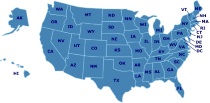
Looking for Another State?
Featured Resources
As an Amazon Associate, we earn from qualifying purchases. We get commissions for purchases made through links on this site.
Homeschooling 101: A Guide to Getting Started
Homeschooling 101 gives you the steps to help you get started on your homeschool journey. This guide lays out how to get started, choose and gather curriculum, scheduling, organizing your home, and finding the joy in homeschooling. This book is perfe...
Bob Books
Bob Books are organized into sets that progress in level as your child learns. They have cute stories and darling illustrations. These books are perfect for children ages 4 to 8.
Bob Books First! Level A, Set 1
Bob Books First! Level A, Set 2
B...

Rhythms of Learning : What Waldorf Education Offers Children, Parents & Teachers (Vista Series, V. 4) (Vista Series, V. 4)
In numerous lectures and through teaching teachers for the first Waldorf school, Rudolf Steiner described and suggested methods of education based on the rhythmic unfolding of spirit, soul, and physiology in children as they grow. In each section of ...
Happy Phonics
Happy Phonics uses games to teach early reading skills. Simple yet entertaining and educational, these phonics games are printed on colorful, sturdy cardstock ready to cut out. Included is a mother-friendly guidebook which contains details on how to ...
Alpha-Phonics
Alpha Phonics is a primer for beginning readers. It features 128 self-explanatory lessons, printed in large, clear calligraphy suitable for beginning readers. You'll find product information about Alpha-Phonics here.
Explore
Quote of the Day
One of the best ways to learn anything is to teach yourself.
Giles Sutherland Rich